“Stop This! My Nanny Didn’t Do It!” — the Millionaire’s Daughter Yelled, Leaving the Court in Shock
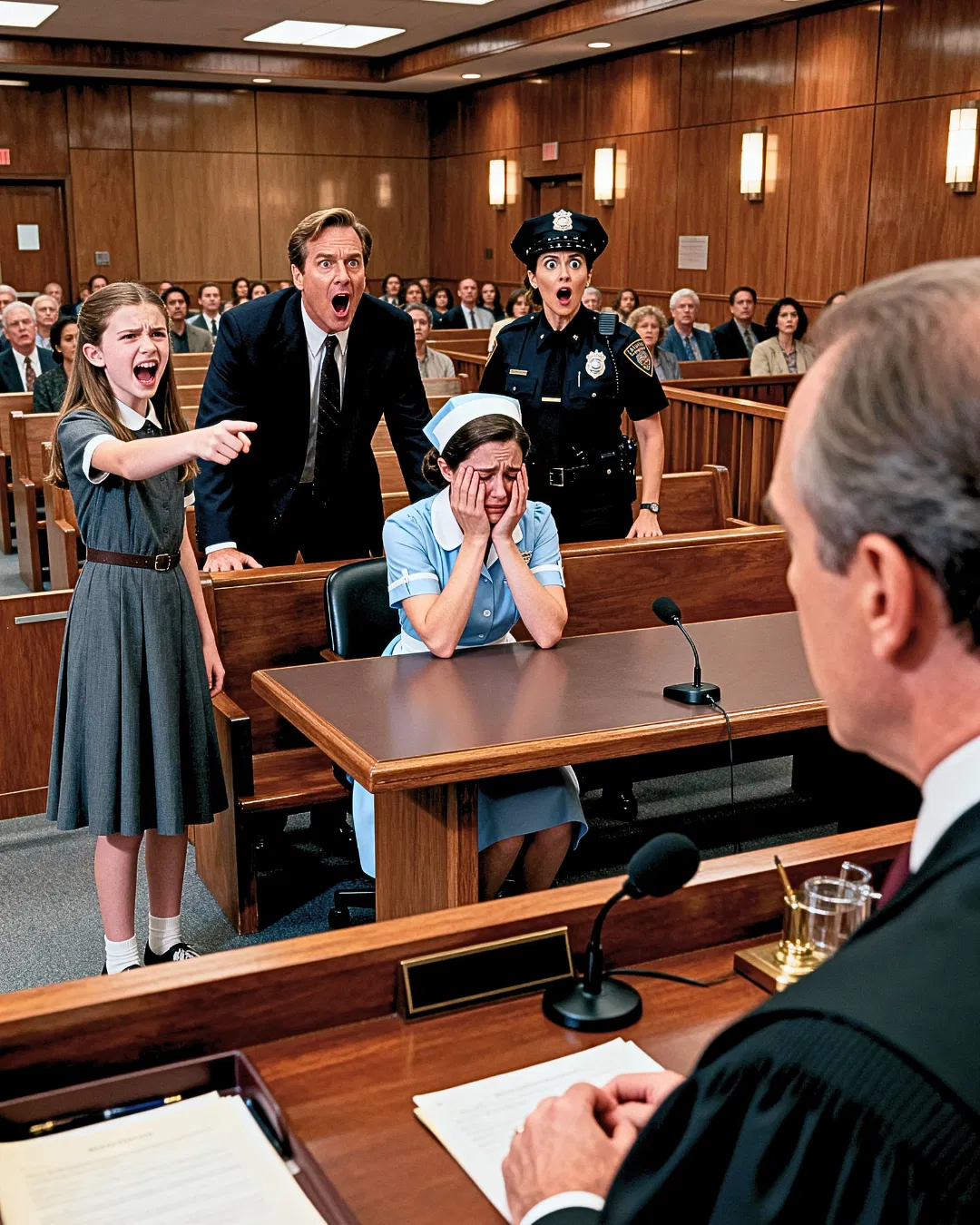

The courtroom froze. The little girl, dressed in red, tears streaming down her face, pointed a trembling finger toward the front. The nanny, hands cuffed, lowered her eyes. The billionaire everyone feared avoided her gaze, as if the floor were about to give way beneath him.
“Who allowed this child inside?” the judge demanded.
No one answered.
Then the girl raised a phone.
When the video began to play, even those who had been whispering fell silent. For the first time that day, power crumbled—and the truth spoke.
Sofía Ríos was twenty-seven, freshly graduated in early childhood education, staring at her phone with shaking hands. The listing read: Live-in nanny for a nine-year-old girl. Salary: 22,000 pesos a month.
For a woman sharing a cramped apartment in Nezahualcóyotl with two roommates, it wasn’t just money. It meant dignity. It meant paying off the medical debts left by her mother’s illness. It meant starting over.
She applied without expectations.
Women like her—public university, modest background—weren’t usually chosen for mansions in Lomas de Chapultepec. But three days later, she got a call. Interview. Avenida Reforma. Two p.m. Formal clothes.
Sofía arrived after two buses and the metro, wearing the only blazer she owned, stitched years ago by her mother. When the iron gates opened on their own, her chest tightened.
The house was enormous—glass walls, manicured gardens, an endless pool overlooking the city. Everything whispered the same message: she didn’t belong.

She was led in through the service entrance by a stern woman with gray hair pulled tight.
“No main doors. No family business. And never get familiar with Mr. Aguilar. You’re here for the child only.”
Her name was Doña Pilar, the head housekeeper.
The interview lasted fifteen minutes. Mateo Aguilar Cortés, forty, tech tycoon, barely looked up from his tablet.
“Experience?”
“Yes, sir. Daycare assistant. Two years in a primary school.”
“You’ll live here. One day off weekly.”
“Yes, sir.”
Finally, he glanced at her. His eyes were sharp, tired, hollow.
“My daughter’s name is Elena. She’s nine. Difficult. Five nannies in two years. If you can’t manage, say it now.”
Before Sofía could answer, a girl appeared at the door.
Elena Aguilar Cortés. Pale dress. Tangled blond hair. Eyes too old for her age.
“You’re the new one?” she asked.
“Yes. I’m Sofía.”
“You’ll leave too. They always do. When he shouts. Or when Marta makes them cry.”
That night, a scream shattered the silence. Sofía ran toward it.
Elena’s door was locked—from the outside.
Inside, the girl was shaking in the closet.
“Marta did this,” Elena whispered. “But Dad never believes me.”
Marta Valdés arrived the next morning—perfect smile, silk robe, eyes empty. She skipped Elena’s breakfast as punishment.
Sofía spoke up. Calmly.
Marta smiled. “Stay in your place.”
From then on, Sofía watched everything.
When Mateo was home, Marta was loving. Online photos. Sweet gestures.
When he left, she became cruel. Locked rooms. Torn drawings of Elena’s late mother. Words whispered only to hurt.
Sofía recorded it all.
When she tried to warn Mateo, he dismissed her.
“Elena imagines things. Marta helps her.”
But something else changed. Elena laughed again. Ate properly. Slept.
Mateo noticed.
One night, he found Sofía in the kitchen.
“My daughter smiles again,” he said. “I thought that part of her was gone.”
They spoke quietly. About grief. About his late wife.
Marta saw everything.
And she struck first.
While Mateo traveled, she hid jewelry in Sofía’s room and locked Elena in the attic with snacks and a tablet.

At dawn, she called the police.
“The nanny took my stepdaughter.”
Sofía was arrested in her pajamas.
The story exploded online.
Two days later, Elena was found alive.
“It was a game,” she said.
Then she showed the phone.
The recordings.
Marta was arrested. Sofía freed.
Outside, Mateo knelt.
“I failed you.”
Elena hugged Sofía.
“I knew you were good.”
At the trial, Marta’s lawyer attacked Sofía’s character.
Then Elena stood up in her red dress.
“Let my nanny go. I know the truth.”
She played the video.
The room collapsed.
Marta was convicted.
Years later, Sofía founded a support center for domestic workers. Mateo restructured his company for social justice.
And framed on a wall was a headline:
“Let My Nanny Go. I Know the Truth.”
Because in the end, it wasn’t money that won.
It was the truth—spoken by a brave child.