
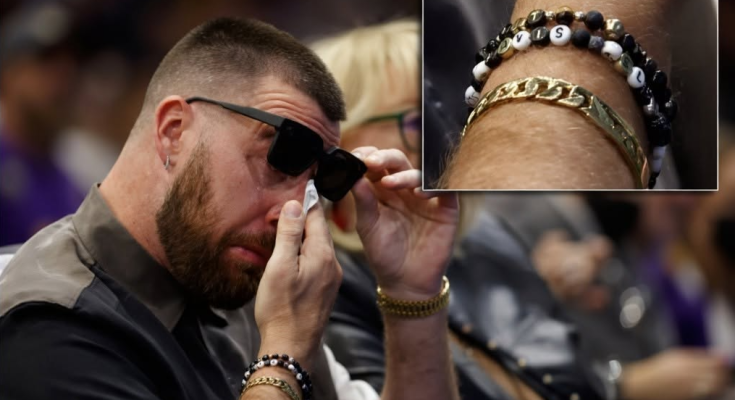
The intersection of professional sports, high-profile celebrity culture, and candid media interviews often creates a breeding ground for viral headlines. While the phrasing of the prompt—suggesting Travis Kelce admitted that she tested positive for something—might playfully or mistakenly invert pronouns, it taps directly into the intense public fascination surrounding the Kansas City Chiefs tight end, his personal life, and his history of unguarded media moments.
Over the years, Kelce’s unvarnished openness has occasionally landed him in the headlines, contrasting sharply with the tightly curated public personas typical of top-tier celebrities. To understand why Kelce’s admissions—whether about himself, locker room culture, or his past—generate such widespread media storms, it helps to examine how his candor shapes his public image and fuels the relentless news cycle.
The Cost of Radical Transparency
Travis Kelce has built much of his massive off-field brand on authenticity. Alongside his brother, Jason Kelce, his hit podcast New Heights gave fans an unfiltered look into the mind of an active NFL superstar. However, this same conversational ease has occasionally resurfaced older, more turbulent chapters of his life.
For instance, media outlets frequently revisit Kelce’s college career at the University of Cincinnati, where he was suspended for an entire year after testing positive for marijuana ahead of the 2010 Sugar Bowl. Kelce has never hidden from this mistake; instead, he has openly discussed how it served as a massive “red flag” for NFL scouts. He has candidly recounted how harsh pre-draft interviews—particularly with teams like the Dallas Cowboys—focused heavily on that single positive test. By owning up to the narrative rather than dodging it, Kelce turned a definitive career low point into a story of redemption, proving that players can overcome early missteps to reach the pinnacle of professional sports.
Locker Room Realities and Media Storms
Beyond his personal collegiate history, Kelce’s willingness to speak bluntly about broader league culture has also generated significant waves. In past profile interviews, such as a widely discussed piece with Vanity Fair, Kelce offered unscripted commentary on the prevalence of cannabis use among professional athletes, estimating that a large percentage of players utilized it during the offseason and explaining the mechanics of how the league’s testing windows worked.
While veterans and sports analysts understood these comments as an open secret within professional sports, mainstream headlines often seized on them to create dramatic narratives. In the hyper-analyzed ecosystem surrounding Kelce—magnified exponentially by his relationship with global pop icon Taylor Swift—every past quote, interview snippet, and piece of trivia is routinely pulled out of context and dissected. Media pundits frequently speculate on how these unfiltered remarks align with Swift’s meticulously managed public image, transforming routine sports commentary into high-stakes pop culture drama.
Navigating the Public Eye
The public’s obsession with what Travis Kelce has or hasn’t admitted highlights a broader shift in how modern athletes are consumed as media figures. Fans no longer want polished, robotic PR-trained soundbites; they crave personality, vulnerability, and humor. Kelce fits this modern mold perfectly. When he discusses past failures, league policies, or personal challenges, he does so with a casual confidence that disarms critics even as it invites scrutiny.
Ultimately, whether the internet is digging up a decades-old college suspension, analyzing a casual remark about locker room culture, or playfully tangling pronouns in a viral headline, Travis Kelce remains unfazed. His willingness to lean into his past mistakes rather than hide from them is precisely what makes him one of the most compelling figures in modern sports and entertainment. By owning his narrative—warts and all—he maintains a rare authenticity that survives the relentless glare of the spotlight.


